Why People in Darjeeling Look Younger Than Their Age :The Hidden Doorway on Kanchenjunga:
Why do people in Darjeeling look younger than their age? Is it the hidden doorway on Kanchenjunga, the local superfoods, or the science of high-altitude living? Let’s explore the secrets of the Himalayas.
The British Came for Health
Most people think the British came to Darjeeling for tea. That came later.
The REAL reason? Health.
In the early 1800s, British officials were dying. Cholera, dysentery, and malaria ravaged European troops stationed in the hot, crowded plains of Bengal. The mortality rate was terrifying.
Medical officers believed the key to survival was escape to the hills.
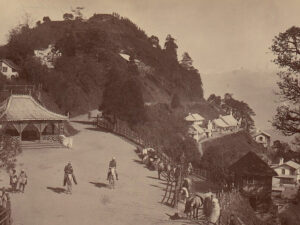
In 1828, Captain G.A. Lloyd and J.W. Grant first saw Darjeeling and immediately thought: “This would be a perfect sanatorium.”
By 1835, they had negotiated a lease from the King of Sikkim for an annual payment of just Rs 3,000. Surgeon Major Archibald Campbell was sent to develop the station – not as a tea plantation, but as a “hill sanitarium for the restoration of the health of Europeans” .
The logic was simple: The hills had pure air, clean water, and escape from tropical disease.
Darjeeling wasn’t discovered for its beauty. It was built for healing.
And today? That same pure air, those same forests, that same altitude – they still affect your body. Just differently.
Why Do People in Darjeeling Look Young? The Hidden Doorway Theory
The Myth of the Hidden Doorway
Have you noticed? People in Darjeeling and Sikkim often look much younger than their age.
Is it the clean mountain air? The organic food? Or is there something more mysterious at play?
Legend says there is a hidden doorway on Mount Kanchenjunga – the third highest mountain in the world. When this door opens, a mystical air flows into the valleys of Sikkim and Darjeeling, making people look younger, feel more energetic, and age slower than people in other regions.
Some call it Shangri-La. Others call it Beyul Demoshong – the “Hidden Land of Immortality.”
The Tibetan Monk Who Almost Entered (Tulshuk Lingpa)
In the early 20th century, a charismatic Tibetan lama named Tulshuk Lingpa was born in Golok, eastern Tibet. As a boy, he was recognized as a “tertön” – a treasure revealer who could discover hidden spiritual teachings.
He was no ordinary monk. He was known as a “nagpa” (a lay tantric practitioner) who enjoyed wine and had a fondness for women. He eloped to India at the age of 18, cured an entire village of leprosy, and even organized an armed expedition against an invasion from Kashmir.
His first name, “Tulshuk,” actually means “crazy” or “mutable” in Tibetan.
In the 1950s, Tulshuk Lingpa started having visions. The spirits told him to go to Sikkim and open the doorway to Beyul Demoshong.
In 1962, he set out for Sikkim with over 300 followers – farmers, Buddhist adepts, and families who had given away all their worldly possessions. They believed they were about to step into paradise and would never return.
They climbed toward the glaciers of Kanchenjunga. Tulshuk Lingpa reached a cave high on the mountain. Inside, he saw a crack in the world – a doorway to another dimension.
Through the doorway, he glimpsed beautiful forests, waterfalls, golden light, and tall beings walking peacefully.
One of his disciples wanted to step through.
But Tulshuk Lingpa stopped him.
“If we enter, what about our brothers and sisters waiting below? We cannot abandon them.”
He chose duty over enlightenment. He turned back.
On the way down, an avalanche struck. Tulshuk Lingpa was killed.
Some say the doorway closed forever because of his hesitation. Others believe it’s still waiting for the right person.
The "Youthful" Foods of the Himalayas
“Have you ever wondered why do people in Darjeeling look young? The answer might surprise you.”
While the mythical doorway may be hidden, the natural treasures of these hills are not. The local diet of Darjeeling and Sikkim is packed with antioxidant-rich foods that fight aging from the inside out.
Scientific studies have confirmed that local Himalayan greens are powerhouses of anti-aging compounds.
| Local Name | Scientific Name | Anti-Aging Benefit |
|---|---|---|
| Sisnu (Stinging Nettle) | Urtica dioica | Highest antioxidant activity among local greens – fights free radicals that cause aging |
| Simrayo | Local leafy green | Second highest antioxidant content – protects cells from damage |
| Ningro (Fiddlehead fern) | Diplazium esculentum | Rich in flavonoids – reduces inflammation, slows aging |
| Bethu (Green sorrel) | Rumex species | Contains unique phenolic compounds for cellular protection |
| Timbur (Local citrus fruit) | Zanthoxylum armatum | High vitamin C and antioxidants – boosts collagen, fights wrinkles |
The people of Darjeeling and Sikkim have been eating these foods for generations – long before science discovered why they work. Now we know: these local foods are nature’s anti-aging medicine.
Why do people in Darjeeling look younger? The hidden doorway on Kanchenjunga, local superfoods, and high-altitude living all play a role.
"So, why do people in Darjeeling look younger? The answer lies in three things: the myth, the food, and the science."
So, Why Do People in Darjeeling Look Young? Let's Look at the Science
The Science of "Younger Blood" at High Altitude
But it’s not just the food. The very air and altitude of Darjeeling change your body at a cellular level.
Scientific research has revealed that spending time at high altitude creates lasting changes in your blood.
| Finding | What It Means |
|---|---|
| 2 weeks at altitude changes red blood cells for months | Even a short trip to Darjeeling can improve oxygen flow for weeks after you leave |
| Blood adapts overnight | Your body begins adjusting to high altitude within 24 hours |
| Better oxygen delivery | Changes in hemoglobin help your body use oxygen more efficiently |
| Long-lasting effects | Red blood cells live for 120 days – the benefits stay with you |
One study found that people who spent just two weeks at high altitude had improved blood function that lasted for months after returning to lower elevations.
The "Forest Air" Secret (Phytoncides)
“Scientists have studied why do people in Darjeeling look young and found several fascinating reasons.”
Have you ever wondered why you feel so relaxed and refreshed after walking through a forest?
There’s science behind that feeling. Trees release natural compounds called phytoncides – volatile organic compounds that protect trees from bacteria and fungi.
| Health Benefit | How Phytoncides Help |
|---|---|
| Boosts immune system | Increases Natural Killer (NK) cell activity – your body’s first defense against illness |
| Reduces stress hormones | Lowers cortisol levels within minutes of exposure |
| Lowers blood pressure | Improves heart rate variability and autonomic nervous system balance |
| Fights inflammation | Reduces chronic inflammation linked to aging and disease |
| Improves mood | Reduces anxiety and depression symptoms |
The forests of Darjeeling and Sikkim – especially the pine and oak forests – are rich in these healing compounds. Every breath you take in these hills is natural medicine.
How Long Should You Stay?
You don’t need to live in the hills forever to experience the benefits. Research suggests that even short visits can have lasting effects.
| Duration | Benefits |
|---|---|
| 24 hours | Blood begins adapting, stress hormones start dropping |
| 1 week | Improved sleep, lower blood pressure, reduced anxiety |
| 2 weeks | Significant changes in red blood cells that last for months |
| 1 month+ | Long-term immune enhancement, sustained antioxidant benefits |
The research found that two weeks in the mountains changed participants’ blood for months after they returned home.
The Honest Truth About Today
But here’s the honest truth.
The Darjeeling of the British era is not the Darjeeling of today.
Population has grown. The quiet colonial outpost is now a vibrant town. Tourism brings visitors from around the world. Vehicles move through the narrow roads.
Yes, like any popular destination, Darjeeling faces challenges. More people means more activity. More activity means more pressure on the environment.
So is the “youthful air” gone?
Not at all.
The forests still release phytoncides. The altitude still changes your blood. The natural diet still nourishes. The stress-free pace of life still heals.
The magic is still here. It always has been.
But like any precious thing, it needs care. When you visit Darjeeling, you’re not just escaping for yourself. You’re supporting a local economy that values sustainability. You’re choosing homestays over crowded hotels, local food over imported, walking over driving.
The door is still open. And it’s waiting for you.
“Now you understand why do people in Darjeeling look young. Come experience the magic yourself.”
The Door Is Still Open (For You)
You don’t need to find a hidden doorway on Kanchenjunga. The door to Darjeeling is already open.
Come breathe the pure mountain air. Eat fresh organic food. Walk through the misty valleys. See if you don’t feel younger.
👉 Book a homestay with Darjeeling Services – direct contact with owners, no middlemen, no commission.
Share this with someone who needs a break from city pollution!
Sources:
- Bhattacharya, Nandini (2012). "The Sanatorium of Darjeeling: European Health in a Tropical Enclave." Oxford Academic.
- Shor, Thomas K. "A Step Away from Paradise" - Account of Tulshuk Lingpa's 1962 expedition.
- Frontiers in Nutrition (2022) - "Antioxidant activities of green leafy vegetables in the Sikkim Himalayan region."
- Science.org (2021) - "Two weeks in the mountains can change your blood for months."
- Kokoro (2024) - "Phytoncides: The Science of Forest Bathing."
- Ghosh, Abhinandan et al. (2023). "PM10 within Indian standard is achievable by mitigating the sources of PM1." Atmospheric Environment.
- University of North Bengal - "Antioxidant activities of edible plants of Darjeeling Himalaya."